Workshop-ready guidance for MIG, TIG, stick and plasma setups Talk with a welding advisor
Setup support from question to first bead

Hobart service paths for practical welding decisions

Good equipment support begins before purchase. A useful conversation covers the joint, material, process, available power and expected arc-on time, then turns those constraints into a machine and consumable shortlist.
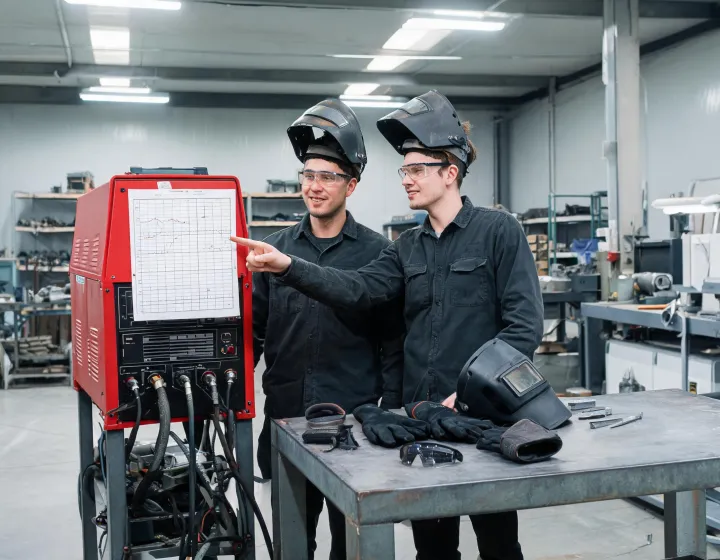
Welding advisor reviewing machine settings with a fabricator
Four useful conversations

Support organized around the job

Each path produces a concrete next step rather than a generic product recommendation.

Process selection

Compare MIG, TIG, stick and flux-cored choices against position, finish expectations and outdoor exposure.

Power planning

Check 120 V or 240 V input, circuit requirements, extension-cord limits and generator compatibility.

Consumable match

Review wire or electrode classification, diameter, polarity, drive-roll style, contact tip and shielding gas.

Procedure check

Use the machine manual, consumable data and applicable welding procedure as the setup references.

MIG welding setup for a mild steel cart frame
Scenario 01 · small fabrication

From material thickness to a repeatable MIG setup

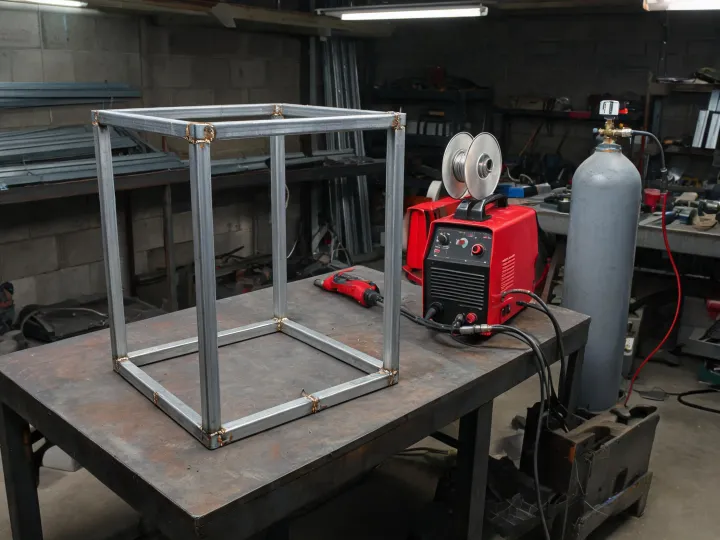
Background: a shop building mild-steel frames needs faster deposition than TIG while retaining straightforward bead control. Process: record the thinnest and thickest joint, confirm input power, select solid wire or flux-cored wire based on shielding conditions, then verify polarity and recommended parameter range. Result: the operator starts from documented settings and adjusts with test coupons rather than guessing on finished parts.

The boundary matters: thin material can be distorted by excess heat, while long high-amperage runs can exceed duty cycle. Both conditions must be checked before production.

Stick welding repair setup outdoors
Scenario 02 · field maintenance

Portable stick capability without skipping site constraints

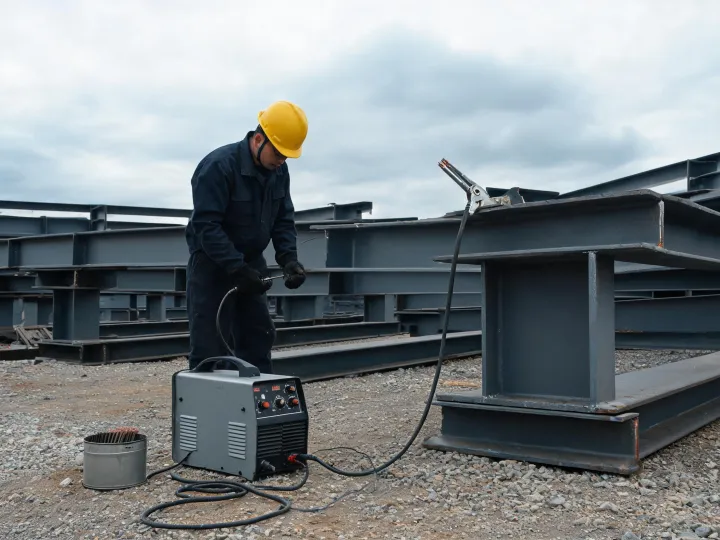
Background: maintenance work outdoors can make shielding gas impractical. Process: identify the base metal and position, choose an electrode classification suited to the procedure, confirm generator or mains input, inspect leads and establish a clean ground connection. Result: the crew carries a setup tied to site conditions, with electrode storage and fire watch included in the work plan.

Stick welding is not automatically the right answer for every repair. Surface condition, code requirements, access and welder qualification can change the procedure.

10 minduty-cycle reference period
2common input-voltage classes
DCEN/DCEPpolarity must be verified
1sttest coupon before the part

Bring a real joint to the discussion

List material, thickness, joint position, input power and target process. An advisor can use that information to frame a more useful equipment comparison and identify which manual tables still need verification.

  • No invented performance guarantee
  • No substitute for a qualified welding procedure
  • Clear limitations for power, duty cycle and environment