Workshop-ready guidance for MIG, TIG, stick and plasma setups Talk with a welding advisor
Hobart workshop resources

Turn the job description into a welder shortlist

Use this four-part worksheet to compare process, input power, rated output and consumable path. It is a selection aid, not a substitute for the machine manual, a qualified welding procedure or hands-on testing.

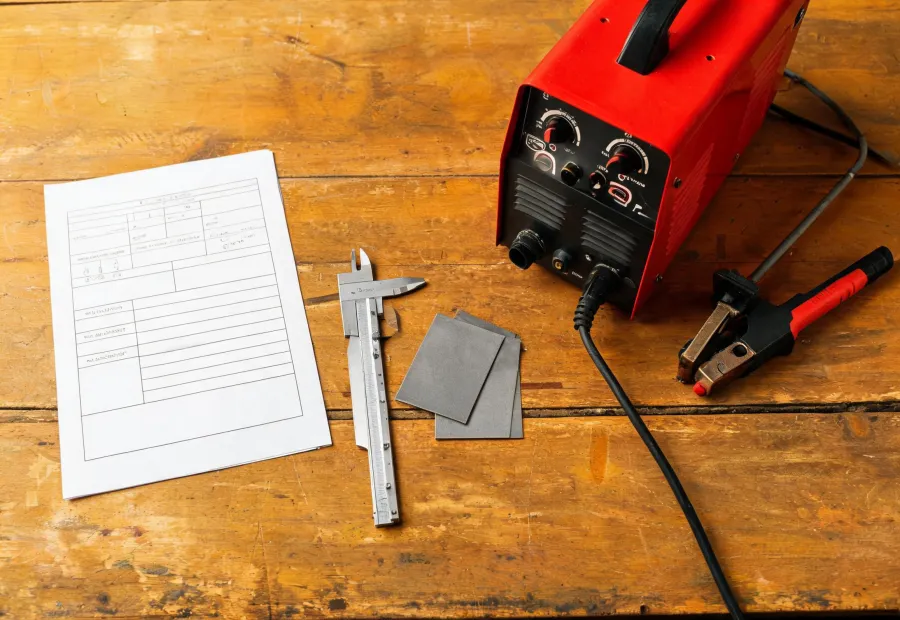
Welding selection worksheet beside MIG and stick equipment
Selection calculator layout

Score constraints before features

Record facts in the order below. A feature matters only if it answers one of these constraints. For example, a high maximum amperage does not compensate for an undersized circuit, and a long duty cycle at one output cannot be assumed at another output.

  1. Joint: base metal, thickness, position and preparation.
  2. Environment: indoor shielding, wind, access and fume control.
  3. Power: voltage, phase, circuit rating and lead length.
  4. Production: arc-on time, deposition need and acceptance criteria.
01

Material & thickness

Separate thin sheet, general plate and heavier sections. Include aluminum or stainless explicitly.

02

Process fit

Compare MIG, TIG, stick and flux-cored routes with shielding and operator skill in view.

03

Rated output

Read the duty-cycle table at the anticipated amperage and ambient condition.

04

Consumable path

Confirm wire or electrode classification, polarity, gas, rolls, liner and contact tip.

Worked examples

How the worksheet changes a recommendation

Thin automotive sheet

Background: short seams on mild-steel panels with high distortion sensitivity. Method: prioritize low-end control, tight fit-up, short weld sequencing and representative coupons. Decision: compare suitable wire-feed setups by minimum controllable output rather than headline maximum amperage.

Limits: technique and joint fit-up can outweigh machine features; burn-through remains possible.

Outdoor equipment repair

Background: access is limited and wind makes external shielding unreliable. Method: compare stick and self-shielded flux-cored paths, then verify material, electrode classification, polarity, generator compatibility and cable length. Decision: portability is scored alongside procedure and site safety.

Limits: repair acceptance may require inspection or engineering review.

Repeated shop frames

Background: mild-steel joints repeat throughout a shift. Method: estimate arc-on time, compare duty cycle at working amperage, document wire diameter, gas and drive-roll setup, then test on scrap. Decision: consistency and serviceability are evaluated with output.

Limits: a stated rating does not predict operator utilization or fixture quality.

Evidence to collectWhere to verifyWhat it prevents
Input voltage and currentNameplate and installation manualUnsupported circuit assumptions
Rated output and duty cycleModel specification tableComparing maximum output alone
Polarity and consumableDoor chart and consumable dataUnstable feeding or incorrect setup
Test result on representative couponDocumented shop trialLearning on a finished component

Request a guided equipment comparison

Send the four constraint groups and the model classes you are considering. The response can identify the specification tables and setup questions that deserve attention.