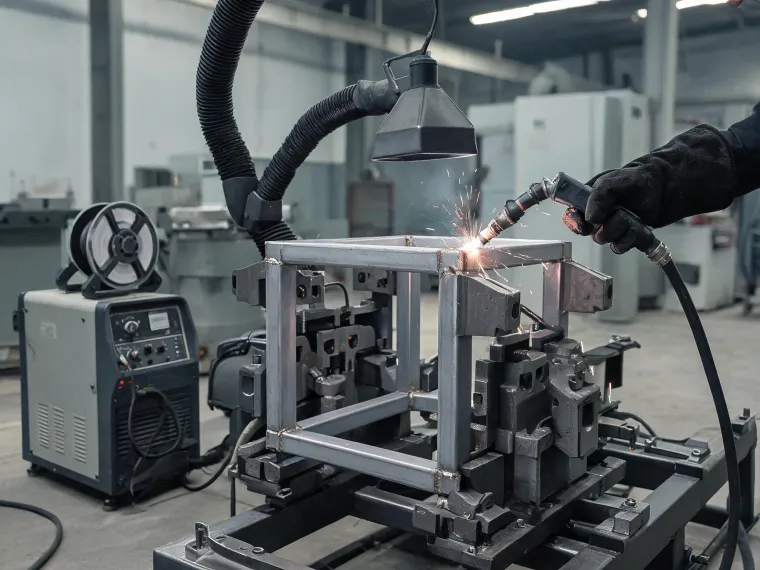
General fabrication
Repeat parts favor consistent wire feeding, fixture access and parameter repeatability. MIG can support productive work, but transfer mode, gas and heat input still depend on thickness and procedure.
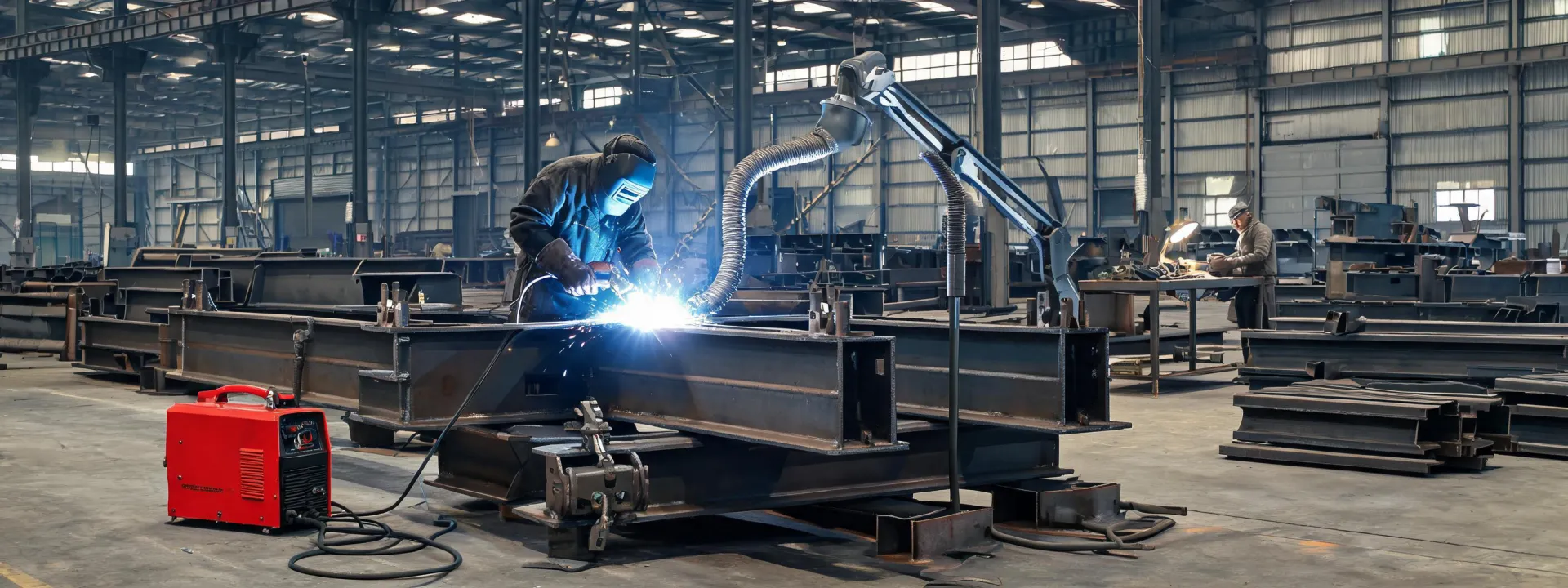
Application context determines more than amperage. Access, joint position, surface condition, shielding, inspection criteria and available power all influence the equipment and consumable path.
Repeat parts favor consistent wire feeding, fixture access and parameter repeatability. MIG can support productive work, but transfer mode, gas and heat input still depend on thickness and procedure.
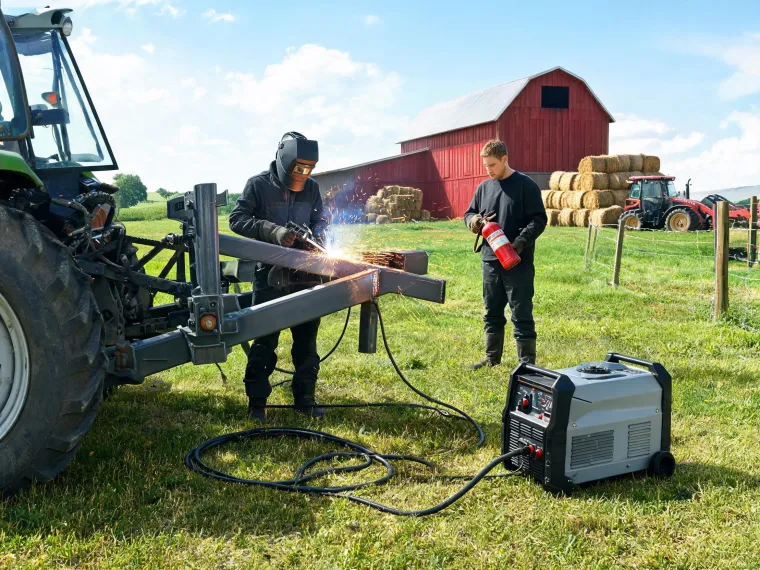
Portability and surface tolerance can favor stick or self-shielded flux-cored processes. The repair may still require material identification, qualified procedure and controlled electrode storage.
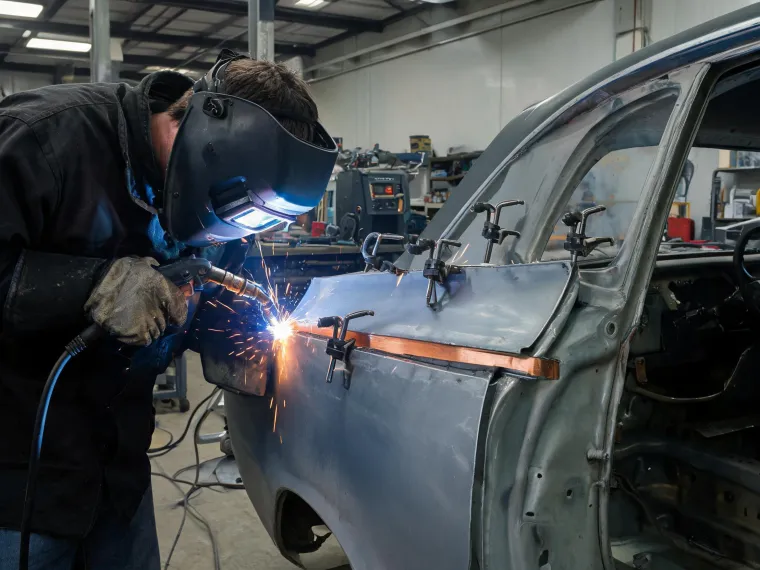
Thin sheet rewards low-end control, short weld sequences and distortion management. More output does not solve burn-through; joint fit-up and travel technique remain central.
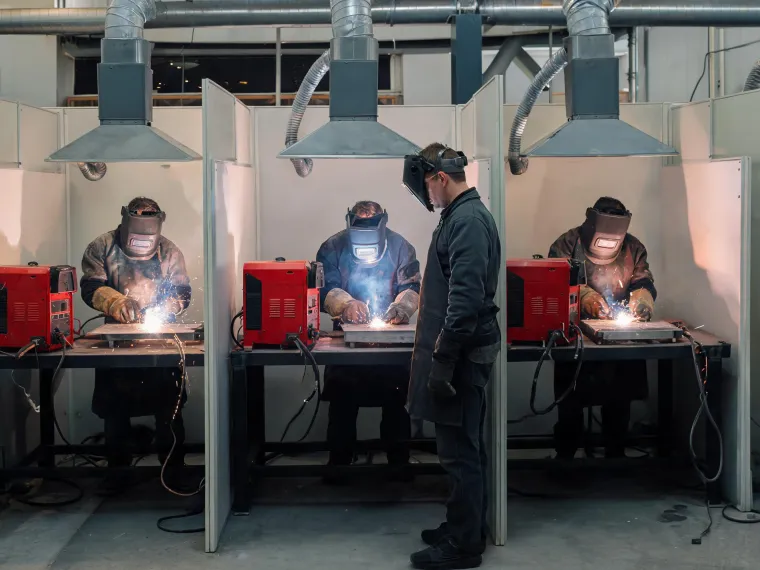
Training bays benefit from clear controls, repeatable setup sheets and equipment that supports the taught process range. Ventilation, booth loading and circuit planning must be evaluated as a system.
MIG can raise deposition rate in controlled shielding conditions, while stick can simplify field logistics. TIG offers precise heat control but generally asks more operator coordination and lower travel speed. Flux-cored wire can improve outdoor practicality, yet fumes, slag and consumable classification remain part of the decision.
| Selection factor | MIG / gas-shielded | Stick / self-shielded |
|---|---|---|
| Outdoor wind | Shielding can be disrupted; barriers may be required | No external gas for stick or self-shielded wire |
| Cleanup | Often less slag, process dependent | Slag removal may be required |
| Thin sheet | Low-end control and technique are critical | Generally harder to control on very thin joints |
| Portability | Gas bottle and feeder affect logistics | Electrode holder and leads can simplify movement |
Tell us where the weld happens, what is being joined, the thickness range, available input power and governing procedure. Those details provide a defensible starting point.
Discuss an application