MIG Welders
For repeatable wire-feed work on steel and mixed fabrication where travel speed and simple parameter changes matter.
Browse MIG equipment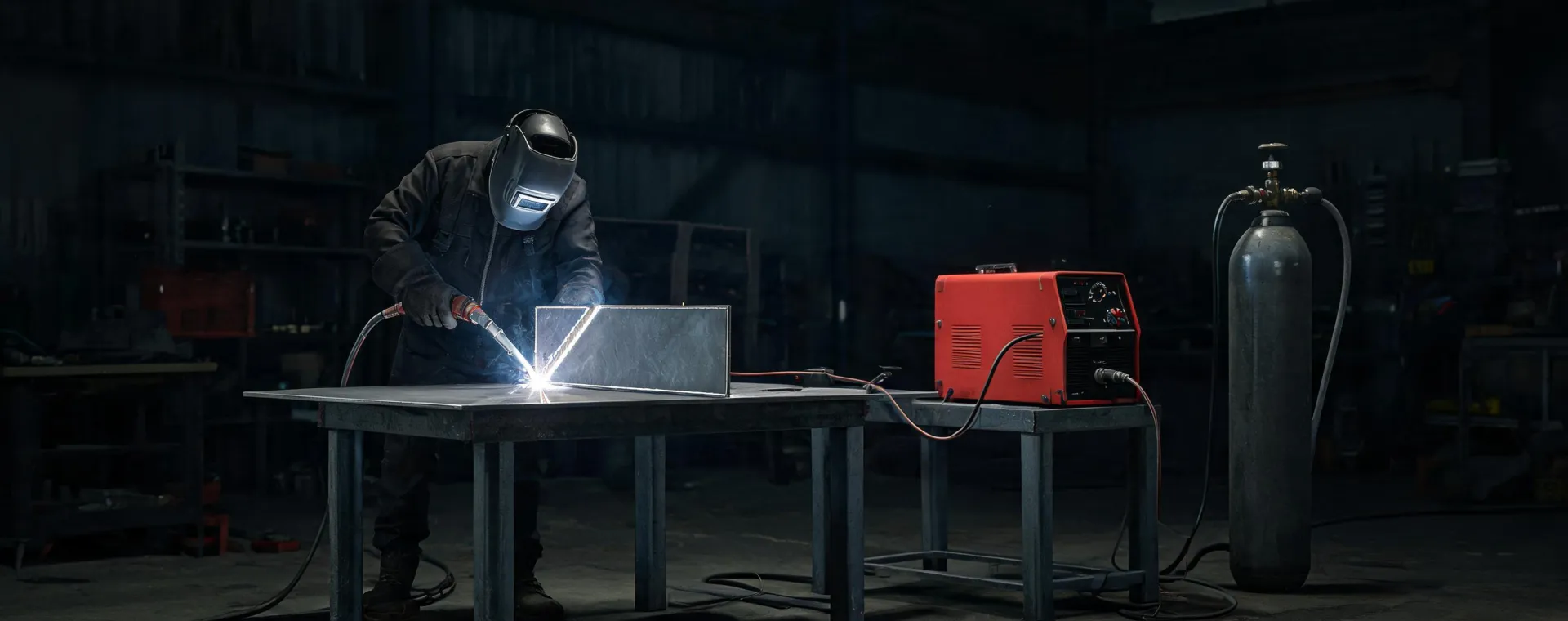
Compare MIG, TIG, stick and plasma equipment by material, input power and expected arc time—then bring those details to a dealer conversation.
The practical choice begins with base metal, thickness, position, shielding method and available input power.
For repeatable wire-feed work on steel and mixed fabrication where travel speed and simple parameter changes matter.
Browse MIG equipmentFor controlled starts, precise heat input and visible puddle management on stainless, mild steel and compatible nonferrous work.
Browse TIG equipmentFor maintenance crews balancing portability, electrode capability and a broader range of shop and field tasks.
Compare process optionsA 120 V outlet can suit lighter work, while thicker material and longer arc time may require a 240 V circuit. Confirm plug, breaker and extension-cord limits in the machine manual.
Verification: nameplate and installation instructionsDuty cycle is measured over a stated ten-minute period at a stated amperage. Compare the rating at the current you intend to use, not just maximum output.
Verification: rated-output tableSolid wire with shielding gas and self-shielded flux-cored wire can call for different polarity, drive-roll and contact-tip choices. Follow the consumable data and door chart.
Verification: consumable specificationSteel, stainless and aluminum can require different processes, filler metals and gas choices.
Minimum and maximum joint thickness guide output range and preparation.
Rated amperage and ambient conditions define practical arc-on time.
Drive rolls, liners, contact tips and gun length affect feeding consistency.
Gas availability, wind and deposition needs influence MIG versus flux-cored choices.
Ventilation, eye protection, gloves and fire prevention remain part of every setup.
Share material, thickness, joint type, available voltage and anticipated arc time. Those five inputs narrow the equipment class without pretending one machine fits every job.