Workshop-ready guidance for MIG, TIG, stick and plasma setups Talk with a welding advisor
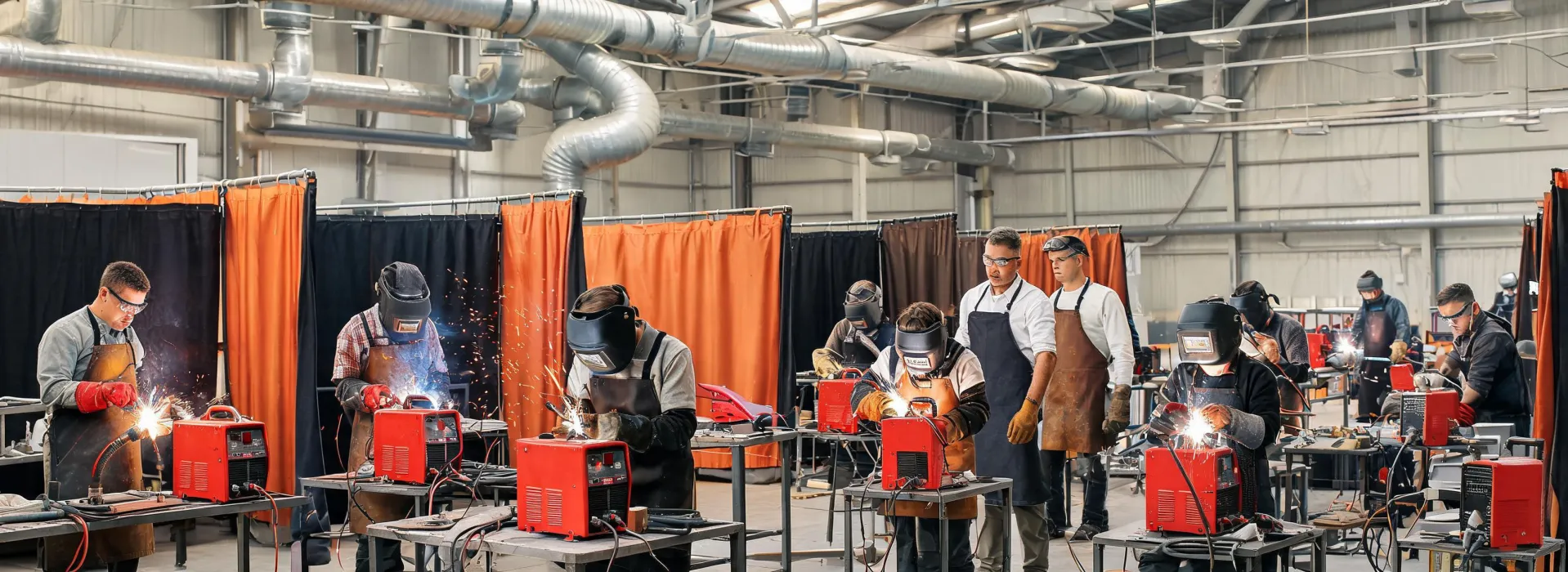
Welders learning machine setup in an active training bay
A workshop-minded equipment guide

About Hobart welding equipment

This site presents process-oriented product discovery for fabricators, maintenance teams, instructors and owner-operators. It focuses on the questions that can be checked: joint requirements, rated output, duty cycle, input power, consumable fit and safe operating instructions.

Mission

Make selection language usable at the workbench

Machine comparison becomes practical when catalog terms are translated into a specific weld: material and thickness, joint position, process, deposition need, input circuit and arc-on time. The goal is a short, verifiable list of questions that a buyer can take to a dealer, instructor or qualified welding professional.

Published specifications and machine manuals remain the authority for individual models. Content here does not establish a welding procedure, certify an operator or replace local electrical and safety requirements.
Vision

Help more buyers arrive prepared

A prepared buyer knows why a machine class may fit the job and where its boundaries sit. That includes the effect of shielding gas outdoors, the heat sensitivity of thin sheet, the distinction between maximum output and rated duty cycle, and the consumable path required for stable wire feeding.

The result is a conversation grounded in evidence rather than superlatives: nameplate, manual, consumable data, test coupon and applicable code or procedure.

How the guidance is framed

Four habits behind every recommendation

Ask about the joint

A process choice without material, thickness and position is incomplete.

Read rated output

Duty cycle must be compared at the amperage relevant to the planned weld.

State the boundary

Wind, extension cords, aluminum feeding and thin sheet each introduce limits.

Verify on a coupon

Setup changes should be evaluated on representative scrap before the finished part.

Keep the work grounded

Turn a machine question into a documented setup

Use the product catalog for a first pass, then bring your application details to a dealer or qualified welding professional. Confirm every final setting against the model manual and the procedure governing the work.

Start a setup conversation